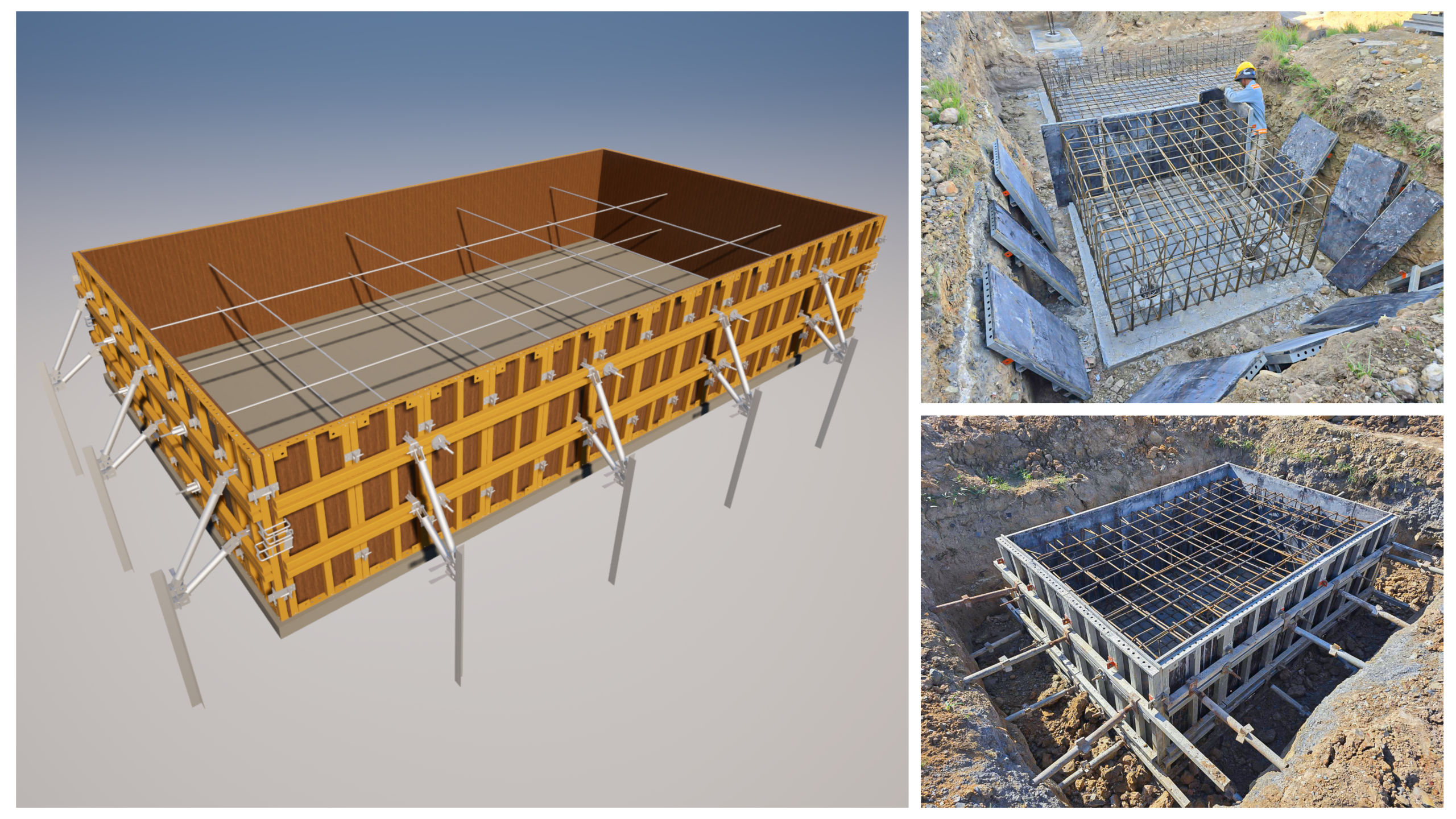
Through its proactive approach to construction innovation, Phuoc Thanh Construction Corporation has developed a modular timber formwork system, enabling faster installation, reducing on-site welding and cutting works, and improving overall material efficiency.
Limitations of Conventional Timber Formwork Methods
In building construction, timber formwork remains a widely adopted solution due to its flexibility and relatively low initial investment cost. However, under conventional practices, formwork installation typically requires extensive on-site welding, cutting, and assembly to accommodate the geometry of individual structural elements.
This approach results in construction quality being highly dependent on the skill levels and workmanship of site operatives and subcontracted crews. Amid the increasing shortage of skilled construction labor, maintaining consistent quality standards across multiple work teams has become a significant challenge for many projects.
In addition, traditional formwork methods incur substantial indirect costs associated with welding equipment, temporary power supply, ancillary materials, and specialized labor. On-site welding and cutting operations also prolong installation time and introduce additional occupational health and safety risks.
Amid increasing pressure to deliver projects faster, at higher quality standards, and at lower costs, construction contractors are compelled to seek more efficient construction solutions that are easier to implement and offer greater reusability in practice.
Phuoc Thanh Develops a Modular Approach to Timber Formwork
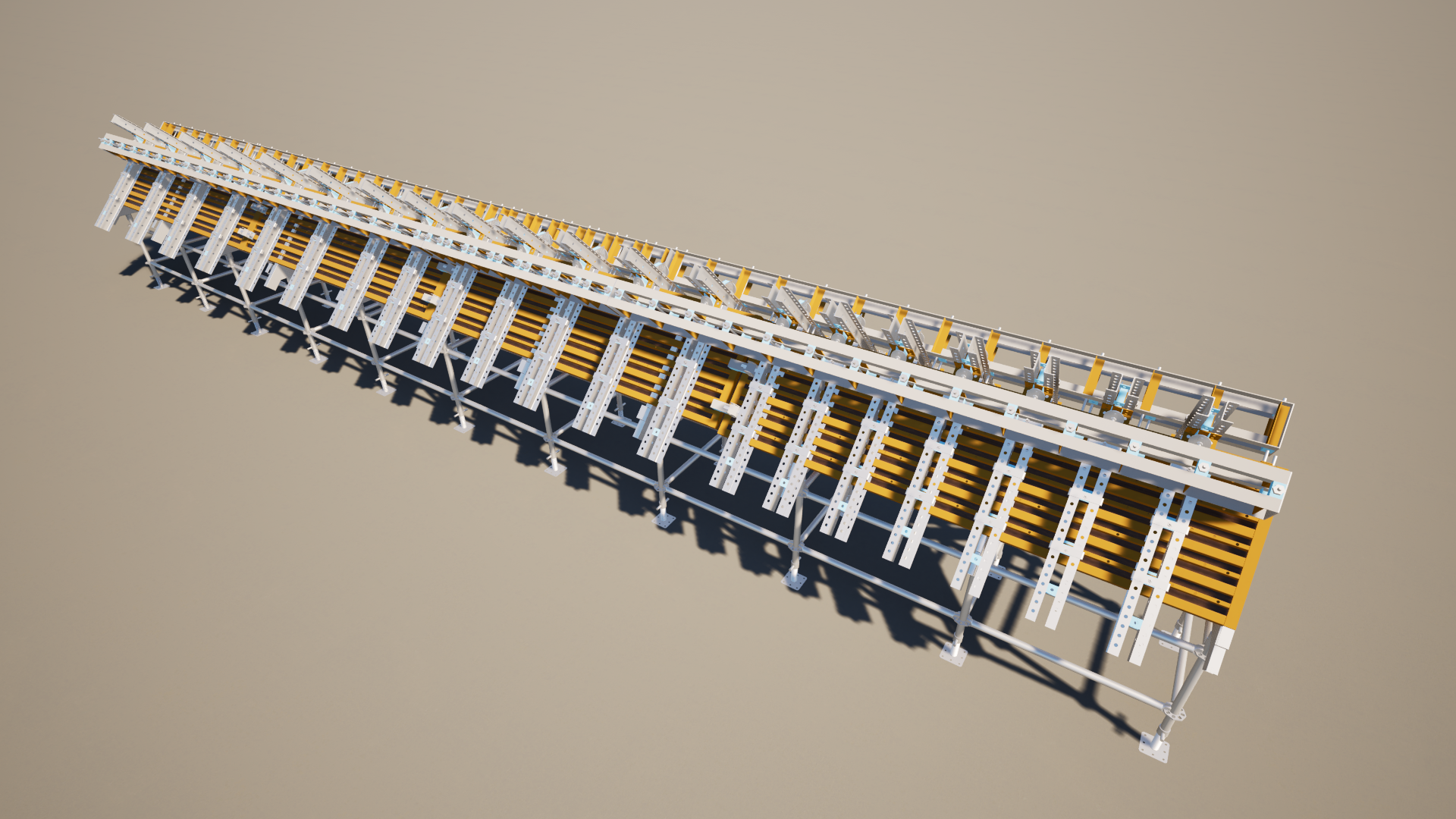
While challenges relating to the cost and supply of aluminium formwork systems remain, Phuoc Thanh Construction Corporation has proactively researched and developed a timber formwork system based on modularization and standardized assembly principles. The objective is to minimize on-site welding and cutting operations while maintaining the flexibility required for various structural elements.
Instead of fabricating formwork directly on site, the system utilizes standardized formwork panels connected through mechanical joints, allowing for easy assembly, dismantling, and adjustment to meet project-specific requirements.
The development process encompasses concept generation, shop drawing design, workshop fabrication, and field testing. Following each stage of implementation, the engineering team evaluates the system’s advantages and limitations and continuously refines the design to better address practical construction requirements.
A key feature of the solution lies in its modular construction philosophy. The panels can be flexibly configured into various dimensions, making them adaptable to a wide range of structural components and client requirements.
Optimizing Construction Efficiency and Enhancing Material Reusability
Compared with conventional timber formwork methods, the improved system significantly reduces on-site welding and cutting activities, shortens installation time, and decreases dependence on highly skilled labour.
One of the system’s most significant advantages is its high level of reusability across multiple projects. Upon completion of one project, the panels can be dismantled, transported, and reused on subsequent projects without requiring extensive re-fabrication. This approach extends the service life of formwork materials and contributes to optimizing overall investment costs.

According to practical implementation results, the solution has delivered approximately 10–20% savings in formwork-related costs while reducing formwork installation time by 20–30%. The system was first introduced into practical application in the fourth quarter of 2025 and has been deployed across Phuoc Thanh’s projects since the second quarter of 2026.
Demonstrating the Main Contractor’s Capability for Construction Method Innovation
More than merely a technical improvement, the modular timber formwork system reflects Phuoc Thanh Construction Corporation’s strategic commitment to proactively researching, developing, and optimizing construction methodologies.